Northern Powerhouse Rail Delayed Until 2026 Amid Bradford Outrage and Funding Uncertainty
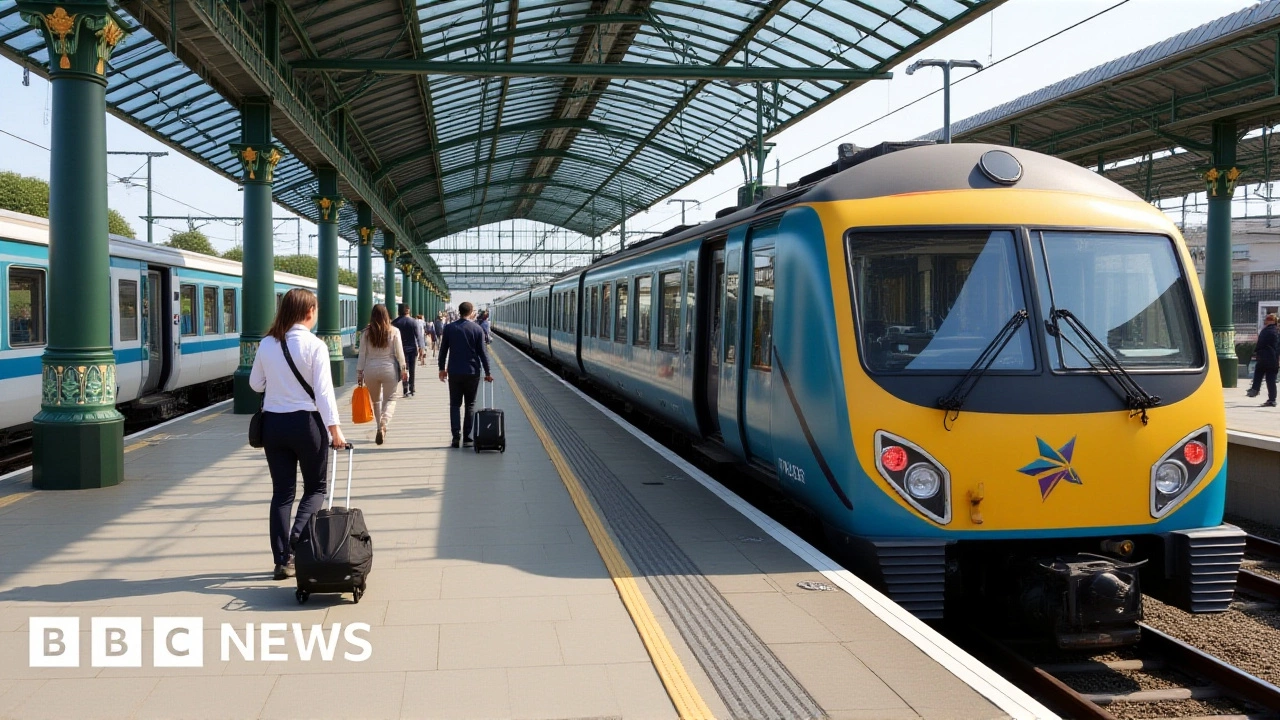
The UK government has pushed back the long-awaited announcement on Northern Powerhouse Rail until 2026, deepening frustration among northern leaders who say the delay is another broken promise in a decade-long saga of neglect. The news, first reported by ITV in November 2025, comes just months after Chancellor Rachel Reeves assured the North that details would be revealed before the Labour Party conference in September 2025 — a promise that evaporated with no public explanation. The result? A wave of anger from mayors, councils, and commuters who see this as more than a scheduling hiccup — it’s a signal that the North’s economic future is still being treated as optional.
‘No Tire Left’: Northern Mayors Sound Alarm
Andy Burnham, Mayor of Greater Manchester, didn’t mince words. "Any more tire kicking and there will be no tire left," said a source close to him, echoing the exhaustion felt across the region. Meanwhile, Tracy Brabin, Mayor of West Yorkshire, took to the microphone with a question that cuts to the heart of the issue: "How can it be right that the 6th biggest city in the UK does not have an adequate rail service?" Her focus? Bradford. Once central to the original vision of Northern Powerhouse Rail, Bradford was stripped from the route in the 2021 Integrated Rail Plan for the North and Midlands — a decision still branded a "Betrayal" by local media and leaders alike.Brabin’s plea isn’t just about prestige. She argues that routing the line through Bradford — not just bypassing it — would create a more resilient network. "Reported plans for the TRU upgrade would also risk local services being cut in the future," she warned, referring to the Transpennine Route Upgrade. "Too much reliance on one line across the Pennines means one breakdown could grind the whole North to a halt. An alternative line via Bradford would make the whole system more robust."
The Long Road to Nowhere: A Timeline of Broken Promises
The roots of this frustration stretch back over a decade. In 2020, work on Northern Powerhouse Rail was already contingent on the fate of HS2’s Phase 2, which was meant to link Manchester and Leeds. But in 2023, former Prime Minister Rishi Sunak scrapped HS2’s northern legs, citing costs and delays — a move that left Northern Powerhouse Rail without its original backbone. The 2021 Integrated Rail Plan then replaced the direct Liverpool-Manchester-Leeds high-speed line with a patchwork of upgrades, rerouting trains through Warrington and Marsden, skipping Bradford entirely.Then came the pandemic. Costs ballooned. Paperwork vanished. By September 2025, an internal review — triggered by a Policy Exchange report that questioned the value of a high-speed Liverpool-Manchester link — forced another postponement. Now, with October 2025 deferrals of HS2-related connections further muddying the waters, the government has effectively reset the clock to 2026 with no guarantee of what will come next.
11 Mayors, One Demand: Fund It Now
In November 2025, leaders from 11 regional authorities — from Newcastle to Merseyside — signed a joint letter to Chancellor Reeves. Their message was blunt: "We need full funding for NPR, not half-measures and hopeful upgrades." They pointed to the Transport for the North (TfN) proposals, which have been unanimously endorsed by every northern mayor — regardless of party — since 2018. These plans explicitly include a new Bradford station, a direct link to Manchester, and a high-speed corridor that would cut travel time from Liverpool to Leeds to under 60 minutes.Yet the government’s Budget 2025 speech, which mentioned "Northern Growth Corridor including Northern Powerhouse Rail," felt like a hollow gesture. No funding commitment. No timeline. No route confirmation. "It’s like being told you’re getting a new car, but no one’s told you what model, when it’s coming, or if it even exists," said one transport official in Sheffield, speaking anonymously.
Political Divide and Public Indifference?
Not everyone agrees on the urgency. Reform UK’s deputy leader, Richard Ty, claimed in October 2025 that "the voters of the north do not want NPR." But his claim flies in the face of polling data from the Institute for Public Policy Research, which found 72% of northern residents support the project — even among those who voted Conservative in 2019.The real tension isn’t between parties — it’s between cities. Manchester and Leeds have long pushed for faster connections between themselves, while Bradford, Sheffield, and Hull argue that excluding them from the network will lock them into economic stagnation. "This isn’t about politics," said Councillor Sarah Khan of Bradford City Council. "It’s about dignity. We’re not asking for luxury. We’re asking for a train that doesn’t take three hours to get to Manchester."
What’s Next? A Race Against Time
The government’s next move — expected sometime in 2026 — will determine whether Northern Powerhouse Rail becomes a transformative infrastructure project or another forgotten promise. With the 2027 general election looming, pressure is mounting for the Labour government to deliver. If they don’t, the backlash could extend beyond transport policy — into voter trust.For now, construction crews sit idle. Engineers wait for blueprints. Bradford’s station site remains a vacant lot. And commuters still board slow, overcrowded trains that crawl through the Pennines like they did 30 years ago.
Frequently Asked Questions
Why is Bradford so critical to Northern Powerhouse Rail?
Bradford is the UK’s sixth-largest city with a population of over 550,000 and a growing economy, yet it lacks a direct high-speed rail link. The original NPR plan included a new station in the city center, which would connect it to Manchester in under 30 minutes and Leeds in under 45. Excluding it forces residents onto slower, congested services and risks long-term economic decline. TfN’s 2020 plans, endorsed by all northern mayors, show Bradford as a key hub — not an afterthought.
How does the delay affect everyday commuters?
The delay means no improvement to journey times, overcrowding, or reliability for at least another year. Many northern commuters already face 2+ hour trips between major cities. The Transpennine Route Upgrade, while helpful, doesn’t add new capacity — it just upgrades existing tracks. Without a new line via Bradford, the entire network remains vulnerable to single-point failures, like signal failures or weather damage, which can paralyze services across the region.
What role did HS2 play in delaying NPR?
NPR was originally designed to connect with HS2 Phase 2, which would have linked Manchester and Leeds via a high-speed spine. When Rishi Sunak scrapped HS2’s northern leg in 2023, NPR lost its backbone. The government then tried to retrofit NPR onto slower, existing lines — a compromise that led to the controversial 2021 Integrated Rail Plan. Later HS2 connection deferrals in October 2025 further muddled the sequencing, forcing planners to restart feasibility studies.
Why did the Policy Exchange report cause such a delay?
The September 2025 Policy Exchange report questioned the economic return on a high-speed Liverpool-Manchester line, arguing that upgrading existing routes was cheaper. But critics say it ignored the long-term productivity gains of reducing travel times by 40-50%. The report gave ministers political cover to delay, even though Transport for the North’s data showed the Liverpool-Manchester leg would generate £2.3 billion in economic value over 30 years — far outweighing its £1.8 billion cost.
What happens if NPR isn’t funded by 2027?
If funding isn’t secured before the next general election, NPR could be shelved indefinitely. Local authorities are already redirecting infrastructure budgets to other projects. Without a firm commitment, private investors won’t commit. The loss of momentum could mean decades of decline for northern cities, as talent and businesses continue to migrate south. It’s not just about trains — it’s about whether the North is seen as a place worth investing in.
Is there public support for NPR in the North?
Yes. A 2025 YouGov poll of 2,000 northern residents found 72% support NPR, including 61% of Conservative voters. Support is strongest in Bradford, Hull, and Sunderland — areas excluded from the current plan. The notion that "northern voters don’t want it," as claimed by Reform UK, is contradicted by both polling and the unified stance of 11 regional mayors — all of whom have demanded full funding.