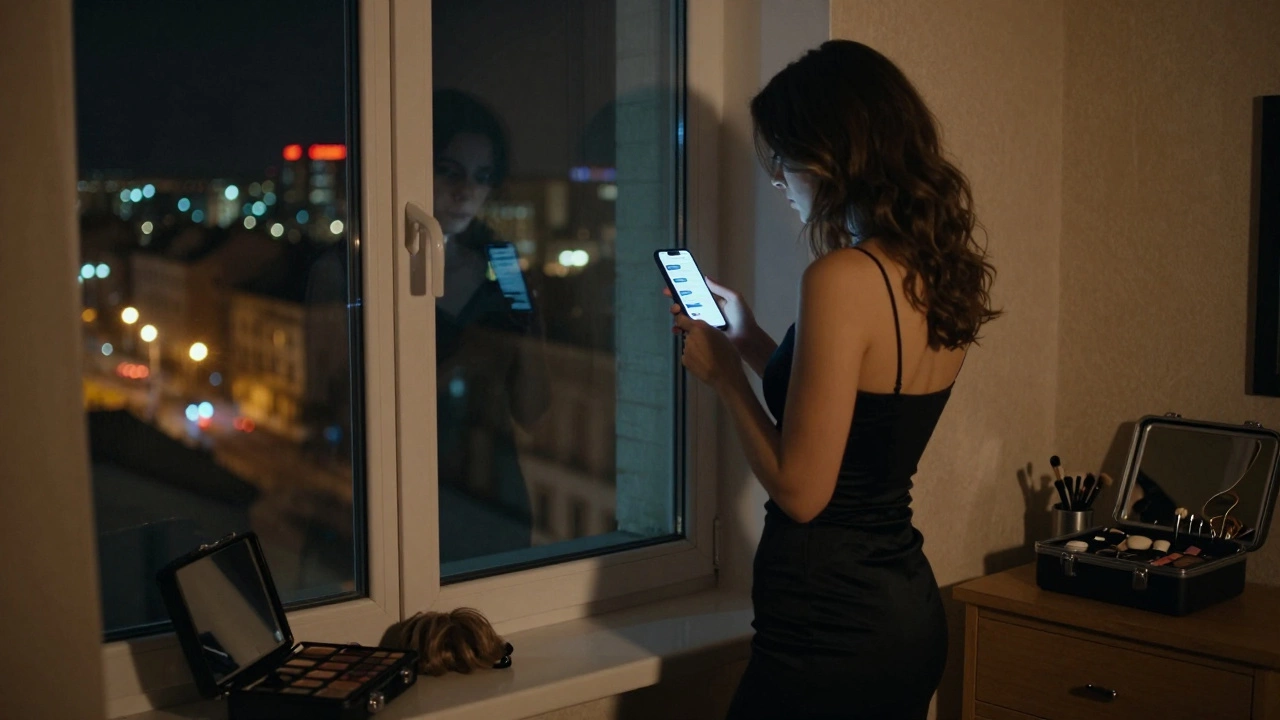
Escort Services in Russia: Legal Boundaries and Social Realities
In Russia, the escort industry exists in a legal gray zone-technically illegal in practice, but quietly tolerated in many urban centers. While prostitution itself is not criminalized under federal law, organizing or profiting from it is. This means that individual sex workers aren’t arrested for offering services, but agencies, websites, and drivers who connect clients with escorts face raids, fines, and jail time. The result? A fragmented, underground network that thrives on discretion, encrypted apps, and word-of-mouth referrals. Many women enter this work not out of choice, but out of economic pressure-low wages, rising living costs, and limited opportunities in smaller cities push them toward the capital or major hubs like Moscow and St. Petersburg. Some even come from other former Soviet states, lured by promises of high pay that often turn out to be misleading.
For outsiders, the scene can seem glamorous. Social media profiles show women in designer clothes, posing in luxury hotels or exotic locations. One such profile, tagged with escort vip paris, might catch your eye-not because it’s relevant to Russia, but because it reflects a global pattern: the commodification of intimacy sold as fantasy. These images are carefully curated. What you don’t see are the 14-hour days, the constant fear of police raids, the emotional toll of performing intimacy with strangers, or the lack of legal protection if something goes wrong. The same dynamics exist in Moscow’s upscale districts, where clients pay hundreds of euros for an hour of company, often under the guise of "tourist companionship" or "modeling services."
How the System Works Behind the Scenes
Most Russian escort services operate through private Telegram channels, encrypted messaging apps, or hidden sections of dating platforms. There are no public listings like in some Western countries. Clients usually find workers through referrals or by browsing photo galleries that don’t list names or locations. Payments are made in cash or via cryptocurrency to avoid digital trails. Many women use pseudonyms, and some even change their appearance between bookings-wigs, different makeup styles, or temporary tattoos-to avoid being tracked.
Unlike in places like Germany or the Netherlands, where sex work is regulated and health checks are mandatory, Russian escorts have no access to state-run medical screenings or labor rights. If a client refuses to pay, there’s no legal recourse. If someone is assaulted, reporting it to police can lead to the worker being charged instead of the attacker. Some NGOs in Moscow and St. Petersburg offer emergency help, but they’re underfunded and often targeted by authorities.
The Role of Social Stigma
Even in cities where the industry is widespread, social judgment is harsh. Women who work as escorts are often labeled as "morally corrupt" by conservative media and religious groups. Families disown them. Former classmates avoid them on social media. In rural areas, rumors can ruin reputations for life. This stigma forces many to live double lives-working as secretaries, tutors, or online influencers during the day, then switching roles at night.
Younger women, especially those under 25, are more likely to use social media to market themselves. Instagram and VKontakte are common platforms. Some post as "travel models" or "influencers" to avoid suspicion. One woman in Yekaterinburg posted photos of herself in Paris, claiming she was on a modeling trip. Her captions mentioned "Paris sex model"-a phrase she used to attract international clients who associate European cities with higher pay and more freedom. But she never actually went to France. The photos were stock images she bought online. The lie wasn’t about glamour-it was survival.

Why Some Clients Choose This Path
Men who hire escorts in Russia come from all walks of life: business executives, students, retirees, foreign workers. Some are lonely. Others are curious. A few are just looking for physical release without emotional ties. Many are married, and they go to great lengths to hide their visits. Some use fake names, pay in cash, and avoid taking photos. Others bring their own condoms and leave immediately after. There’s no romanticization here-this isn’t about love or connection. It’s transactional, often cold, and rarely discussed outside private circles.
One client, a 48-year-old engineer from Novosibirsk, told a journalist in 2024 that he’d been seeing the same woman for three years. "She knows my habits, my schedule, my silence," he said. "I don’t have to pretend to be someone else. She doesn’t ask questions. That’s the deal." His story isn’t unusual. For many, the appeal isn’t sexual-it’s emotional neutrality. In a society where vulnerability is seen as weakness, paying for companionship becomes a way to feel seen without risk.
International Comparisons and Myths
People often assume Russia’s escort scene is similar to what they’ve seen in movies or heard about in places like Thailand or Brazil. It’s not. There are no red-light districts like Amsterdam’s De Wallen. No open brothels. No licensed massage parlors. The entire system relies on invisibility. Even the term "escort" is avoided in public. Workers are called "companions," "models," or "tour guides." Clients refer to them as "friends" or "acquaintances."
Some Russian women do travel abroad for work, especially to Europe. A few end up in Paris, where demand for Eastern European women remains high. That’s where the phrase "paris sex" pops up in online searches-often used by recruiters or traffickers to lure women with false promises of modeling contracts or high-paying gigs. In reality, many are trapped in exploitative situations with little chance of escape. The legal environment in France is stricter than in Russia, but the risks are just as real.

What’s Changing? And What’s Not
Since 2022, Russian authorities have cracked down harder on online platforms that host escort ads. Telegram channels have been shut down. Payment processors have been pressured to block transactions linked to adult services. Some women have shifted to offline meetups arranged through friends or mutual contacts. Others have moved into full-time sex work, abandoning the escort label entirely. A growing number are turning to live cam platforms, where they can earn more without physical contact.
Meanwhile, younger generations are starting to question the system. A few activists in St. Petersburg have begun documenting cases of abuse and pushing for decriminalization. Their goal isn’t to normalize escorting-it’s to give workers basic rights: access to healthcare, legal support, and protection from violence. So far, the government ignores them. But change, even slow and quiet, is happening.
The Human Cost Behind the Facade
Behind every profile, every photo, every encrypted message, there’s a person. Not a stereotype. Not a fantasy. A real woman with dreams, fears, and regrets. Some want to leave. Others are trapped by debt, family obligations, or fear. A few have found ways to save money and start small businesses-selling handmade crafts, offering language lessons, or running online stores. But those stories rarely make headlines.
The escort industry in Russia isn’t about sex. It’s about survival. It’s about a system that offers no safety net, then punishes those who try to climb out. And it’s about the quiet, daily courage of women who keep going-even when the world looks away.